Key Takeaways
- Small businesses must identify and assess various risks, including financial, operational, and market-related challenges.
- Implementing comprehensive risk management strategies enhances resilience and ensures long-term success.
- Leveraging technology and fostering a culture of adaptability are crucial in mitigating potential threats.
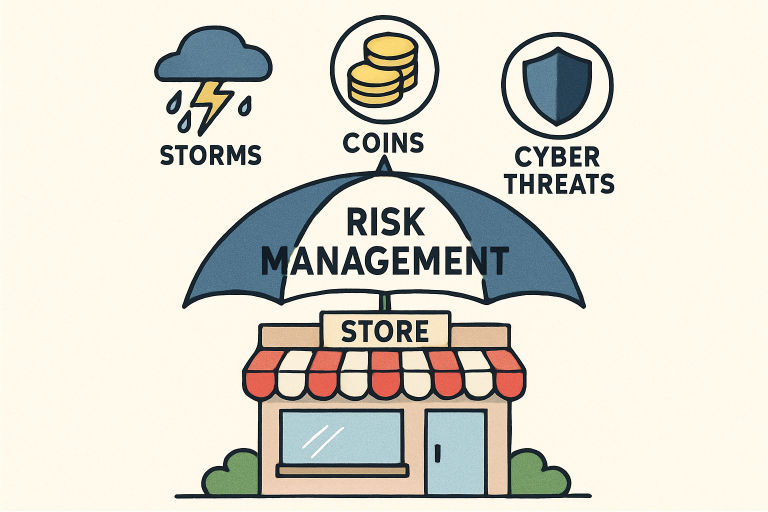
For small businesses today, the ability to adapt to shifting market conditions and economic uncertainty is vital. In this climate, being proactive about risk management isn’t just prudent—it’s essential for survival and growth. Entrepreneurs and business owners must remain vigilant, continually identifying new risks while employing strategies that keep their operations secure. One of the first things to consider is insurance for small businesses, which can provide crucial protection from unforeseen events such as property damage, liability issues, or even cyber threats.
But insurance is just the beginning. Small business owners are discovering that cultivating a culture of preparedness, leveraging smart technologies, and reassessing their core operational procedures enable them to navigate challenges ranging from supply chain disruptions to regulatory overhauls. Strategic foresight, coupled with resilient organizational practices, empowers businesses to thrive—despite waves of uncertainty and disruption.
The most resilient companies recognize that risk management must be a living process. Continuous evaluation, adjustment, and staff participation all play significant roles in long-term stability. Learning from recent downturns and rapidly evolving customer demands, modern small businesses are rethinking how to identify, manage, and mitigate the risks they face.
Additionally, working with trusted advisors and leveraging comprehensive government and industry reports, such as those compiled by the U.S. Small Business Administration, has become a best practice among agile organizations. Proactive owners integrate these insights with internal policies to maintain stable operations in a frequently changing landscape.
Understanding Common Risks Faced by Small Businesses
Small businesses seeking sustainable growth face various risks, categorized into three main types. Financial risks include cash flow shortfalls, profit volatility, exposure to bad debt, and fluctuating lending rates. Operational risks encompass disruptions in supply chains, equipment failures, staffing shortages, and unplanned downtime due to emergencies. Market risks stem from changing consumer preferences, increased competition, and unpredictable regulatory shifts or tariffs. Thorough documentation and understanding of these risks are essential for establishing a risk management plan that systematically addresses each risk before it escalates into a more significant issue.
Developing a Comprehensive Risk Management Plan
Creating a solid risk management framework is a four-step process:
- Risk Identification: Encourage leadership teams and key employees to brainstorm all possible threats, specific to the business’s industry and region.
- Risk Assessment: Analyze the likelihood and potential impact of each risk, using data and scenario planning.
- Risk Mitigation: Decide which risks to avoid, transfer (for example, through insurance), reduce with new protocols, or accept as part of conducting business.
- Monitoring and Review: Risk management must evolve—so review strategies and incident reports regularly to make policy updates as dynamic threats change.
For more information on developing effective risk management plans, the Harvard Business Review offers insight into proven frameworks used by top-performing businesses.
Leveraging Technology to Mitigate Risks
Deploying new technologies offers one of the fastest and most effective ways to mitigate business risks. Cloud-based solutions, for instance, enable remote work, rapid scaling, and data redundancy in the event of a disaster. Meanwhile, cybersecurity platforms protect sensitive data and defend against increasingly common ransomware attacks.
Digital payment systems, AI-driven analytics, and customer management platforms enable owners to make informed decisions, streamline operations, and respond promptly to market changes. The Organization for Economic Cooperation and Development (OECD) notes that digital transformation boosts resilience in SMEs by ensuring business continuity and unlocking innovative solutions to emerging challenges.
Financial Risk Management Strategies
Proactive financial stewardship is essential for stability and growth, encompassing several effective strategies. It is crucial to maintain emergency funds to absorb unexpected costs and delays. Diversifying revenue streams reduces reliance on a single customer or market segment, thereby spreading risk. Additionally, consistently monitoring financial metrics through updated accounting tools helps track profitability and expenses, identifying potential issues early. Implementing these strategies ensures organizations can navigate economic turbulence without being overwhelmed by financial surprises.
Operational Risk Management Approaches
Strong operations are the backbone of resilience. Small businesses are encouraged to implement the following:
- Supply Chain Diversification: Establish relationships with multiple suppliers for each essential resource to maintain uninterrupted production during disruptions.
- Regular Maintenance: Schedule preventative checks on critical equipment and backup systems to reduce the likelihood of downtime.
- Employee Training: Conduct regular staff education on safety and cyber hygiene to minimize human error and ensure compliance with regulations.
Mitigating operational risks early is far less costly than recovering from failures that jeopardize revenue or reputation.
Market Risk Management Techniques
Successful businesses maintain vigilance by implementing several key tactics. They invest in market research to gather and analyze data, drawing insights from customer feedback and industry trends. Additionally, they focus on product innovation by regularly updating and diversifying their offerings to align with changing consumer demands. Competitive analysis is also crucial, as it helps them stay aware of rival businesses’ strategies, allowing them to identify opportunities and potential threats. By actively engaging with market information, these businesses can pivot quickly and mitigate the risks of becoming obsolete.
Building a Resilient Organizational Culture
A risk-aware, resilient business culture is foundationally established by leadership but necessitates widespread buy-in throughout the organization. Key strategies to foster this culture include encouraging adaptability through rewards for innovation and flexibility when addressing new challenges. Transparent communication is vital, ensuring staff are informed about risk management strategies and have access to clear crisis protocols. Additionally, empowering employees by granting them responsibility and autonomy boosts motivation and fosters a sense of ownership over their contributions to organizational resilience. The development of cultural resilience enables businesses to confidently respond to crises and utilize adversity as an opportunity for improvement.
Conclusion
Risk management is part of the DNA of modern small businesses. Firms that build flexible strategies, adopt secure technologies, nurture a responsive workforce, and safeguard assets with strong insurance policies are prepared for the unexpected. In an economy where rapid change is the norm, not the exception, careful planning and decisive action enable small businesses not only to weather storms but also to thrive amid them.