Choosing the right foundation is one of the most important decisions when installing a backyard shed. Even a well-designed structure can develop problems if it sits on an unstable, uneven, or poorly drained surface. The right base helps support the shed, manage moisture, and protect your investment through changing seasons.
For homeowners comparing sheds for garden storage, workshops, or year-round outdoor rooms, three common options stand out: a concrete slab, a compacted crushed stone pad, and a shed with a built-in floor. Each has different installation requirements, costs, and practical benefits. Understanding these differences can help you select a foundation that suits your property, intended use, and local weather conditions.
Concrete Slab: A Solid Base for Heavy-Duty Use
A concrete slab is a popular choice for sheds that need a durable, rigid foundation. Its stable surface can work well for workshops, equipment storage, and structures that will hold substantial loads, provided the slab is properly designed for the building and its intended use.
Concrete is particularly useful when you want a level floor for wheeled equipment, shelving, or heavy machinery. It can also simplify cleaning because the surface is firm and relatively easy to maintain.
However, a concrete slab requires more preparation than some alternatives. Excavation, formwork, reinforcement where required, and proper curing can add time and expense. Drainage must also be planned carefully. Water should flow away from the shed rather than collect around its edges, and the slab should be designed to prevent moisture from entering the structure.
Concrete can feel cold underfoot and may transfer ground moisture if it lacks appropriate moisture protection. For a backyard office or hobby room, additional flooring and insulation may be necessary. Before installation, check local building codes and the shed manufacturer’s foundation requirements.
Compacted Crushed Stone Pad: Practical Drainage for Outdoor Sheds
A compacted crushed stone pad is another common option, especially for homeowners who want a relatively economical foundation without pouring concrete. When properly excavated, graded, and compacted, crushed stone creates a stable surface while allowing water to drain through the aggregate.
This makes it worth considering for garden sheds, lawn equipment storage, and other structures where ground moisture and rainfall are concerns. A well-prepared stone pad can also be easier to modify or remove than a permanent concrete slab.
The quality of the installation matters, however. Loose gravel dumped directly onto the ground is not equivalent to a properly constructed base. The site should be cleared of organic material, excavated as needed, and prepared with suitable crushed aggregate. The finished surface must be level, compacted, and large enough to support the shed according to its installation instructions.
In areas with heavy rainfall, frost, or unstable soil, additional site preparation may be necessary. Stone pads are not automatically suitable for every shed, particularly those designed for heavier loads or continuous occupied use. Always confirm the manufacturer’s foundation specifications before choosing this option.
Built-In Insulated Floors: An Integrated Approach
For homeowners planning to use their shed as more than a storage enclosure, a built-in insulated floor offers a different advantage. Rather than treating the floor as a separate interior upgrade, this design incorporates flooring and insulation into the structure itself.
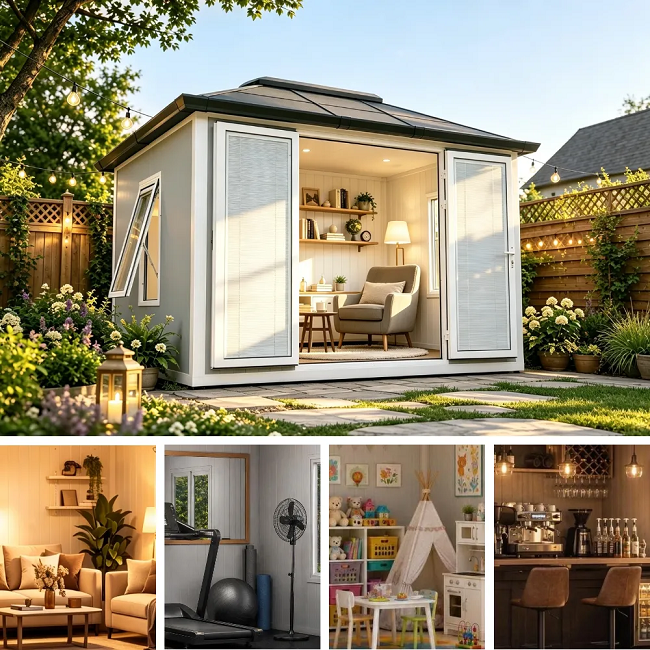
The SUNJOY Esquire 10 x 12.5 Beyond Shed is designed with an insulated floor alongside insulated walls, roof, doors, and windows. Its waterproof flooring system and weather-resistant construction make it an option worth considering for a backyard office, hobby room, or home fitness space.
An integrated floor can reduce the need to source and install separate flooring materials. Insulation also helps reduce heat transfer through the floor, which can contribute to a more comfortable interior when combined with suitable temperature control and ventilation.
However, a built-in insulated floor does not eliminate the need for a proper foundation. The ground beneath the shed still needs to be stable, level, and prepared according to the manufacturer’s instructions. The foundation must support the structure, keep it appropriately elevated, and help prevent water from collecting underneath.
This distinction is particularly important when comparing the best foundation base for a metal shed with the benefits of an insulated floor. The two serve different purposes: the foundation supports the building, while the integrated floor provides the interior walking surface and thermal protection.
Which Base Best Suits Your Backyard?
The right choice depends on how you plan to use your shed, the conditions on your property, and the requirements of the specific model.
A concrete slab may suit a workshop or storage structure that requires a rigid surface and substantial load capacity. A compacted crushed stone pad can be a practical choice for lighter structures when drainage and site preparation are handled correctly. A shed with a built-in insulated floor may be attractive if comfort and convenience matter, particularly for an outdoor room used regularly.
Before making a decision, compare the total installation cost, drainage needs, local frost conditions, access for construction equipment, and any permitting requirements. Most importantly, check whether the shed manufacturer specifies a particular foundation type or minimum support requirements.
Create a Shed That Works in Every Season
Weather-resistant sheds depend on more than durable exterior materials. A suitable foundation, effective drainage, moisture protection, and appropriate insulation all contribute to long-term performance. Even a well-built shed can experience problems if water accumulates beneath it or the structure settles on an uneven base.
SUNJOY’s Esquire Beyond Shed combines insulated walls, roof, doors, windows, and flooring with a weather-resistant design intended for flexible backyard use. Pairing these features with a properly prepared foundation can help create a space that supports storage, work, and everyday activities more comfortably.