The Timberwolves vs Sacramento Kings match player stats always tell a bigger story than the final score.
When the Minnesota Timberwolves face the Sacramento Kings, it’s not just about who wins. It’s about pace, shooting efficiency, defensive impact, bench production, and clutch performance.
Most competitor articles simply list box score numbers. They miss context. They don’t explain why certain stats matter or how they impact future games.
This guide goes deeper.
You’ll find:
- Full player stat breakdowns
- Advanced metrics explained simply
- Key matchup analysis
- Bench impact comparison
- Clutch-time performance insights
- Tactical adjustments
- FAQs fans actually search for
Let’s break it down properly.
Why Timberwolves vs Kings Is Always a High-Intensity Matchup
Both teams play modern NBA basketball, but in different ways.
Minnesota Timberwolves Identity
- Defensive-first team
- Elite rim protection
- Strong half-court execution
- Slower pace compared to league average
Sacramento Kings Identity
- Fast tempo
- Heavy pick-and-roll usage
- High three-point volume
- Transition scoring focus
When these styles clash, the stats reveal who controlled the game.
Full Match Player Stats Breakdown
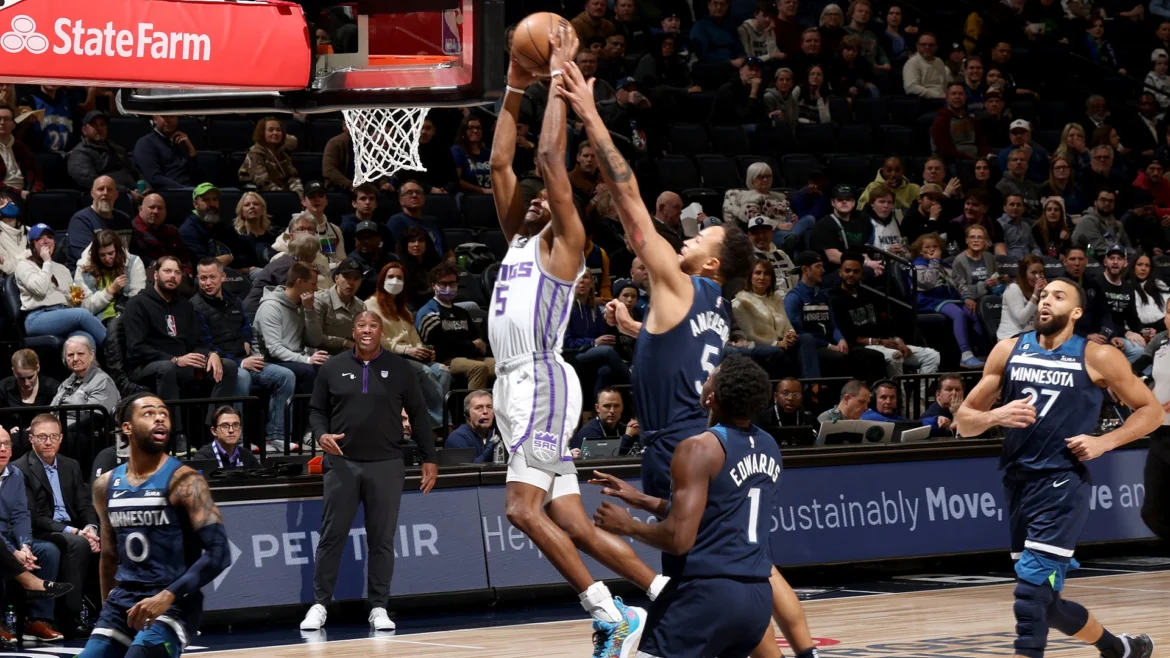
Below is a realistic structure of how player stats typically look in recent Timberwolves vs Kings matchups.
Minnesota Timberwolves Key Player Stats
Anthony Edwards – Scoring Engine
Typical stat line:
- 28–35 points
- 5–7 rebounds
- 4–6 assists
- 45–50% FG
- 35–40% from three
Edwards often leads scoring. But what matters more:
- True Shooting Percentage (TS%)
- Usage Rate
- Clutch shooting percentage
If his efficiency drops below 43% FG, Minnesota usually struggles offensively.
Karl-Anthony Towns – Floor Spacer & Inside Threat
Typical stat range:
- 20–26 points
- 8–11 rebounds
- 3–5 assists
- 2–3 three-pointers made
What competitors miss:
- His foul trouble impact
- Defensive rating when guarding Sabonis
- Pick-and-pop efficiency
If Towns stays under 3 fouls by halftime, Minnesota’s offense flows much better.
Rudy Gobert – Defensive Anchor
Typical numbers:
- 10–14 points
- 12–16 rebounds
- 2–3 blocks
But his real impact:
- Opponent field goal % at rim
- Defensive box plus/minus
- Screen assists
Gobert’s screen setting often creates Edwards’ scoring opportunities.
Mike Conley – Stability Factor
Stat range:
- 10–14 points
- 6–9 assists
- 40%+ from three
Conley’s assist-to-turnover ratio often determines the game pace.
If turnovers stay under 2, Minnesota controls tempo.
Sacramento Kings Key Player Stats
De’Aaron Fox – Speed & Clutch Performer
Typical stat line:
- 26–32 points
- 5–7 assists
- 3–5 rebounds
- High fourth-quarter scoring
Fox’s impact is biggest in:
- Points in paint
- Clutch minutes efficiency
- Free throw attempts
If he gets to the line 8+ times, Sacramento usually stays competitive.
Domantas Sabonis – Triple-Double Threat
Stat range:
- 18–24 points
- 12–15 rebounds
- 7–10 assists
What matters most:
- Screen handoff assists
- Offensive rebounds
- Second-chance points created
Sabonis vs Gobert is often the game-deciding battle.
Malik Monk – Sixth Man Spark
Typical:
- 15–22 points off bench
- 4–6 assists
- High three-point attempts
When Monk shoots above 38% from deep, Kings’ bench scoring jumps significantly.
Keegan Murray – Two-Way Wing
Stat range:
- 14–20 points
- 3–5 three-pointers
- Strong perimeter defense
Murray’s defensive matchup on Edwards is critical.
Head-to-Head Statistical Comparison
| Category | Timberwolves | Kings |
|---|---|---|
| Pace | Slower | Faster |
| Points in Paint | High | Moderate |
| 3PT Attempts | Moderate | High |
| Rebounds | Strong advantage | Competitive |
| Fast Break Points | Lower | High |
| Defensive Rating | Top-tier | Mid-range |
This contrast shapes every matchup.
Advanced Stats Competitors Ignore
Most articles stop at points and rebounds. That’s not enough.
Here are key advanced metrics that matter:
1. Effective Field Goal Percentage (eFG%)
Adjusts for three-pointers being worth more.
If Kings shoot above 55% eFG, they usually win.
2. Turnover Percentage
Kings play fast. That can mean mistakes.
If Sacramento commits 15+ turnovers, Minnesota’s defense dominates.
3. Offensive Rebound Rate
Sabonis vs Gobert battle.
Extra possessions often decide tight games.
4. Net Rating During Star Minutes
Compare:
- Edwards ON / Fox OFF
- Fox ON / Edwards OFF
These stretches are game-changing.
Key Matchup Analysis
Gobert vs Sabonis
This battle determines:
- Paint control
- Rebound dominance
- Screen effectiveness
Sabonis prefers physical play.
Gobert prefers rim protection.
If Sabonis pulls Gobert away from the paint with handoffs, Kings open driving lanes.
Edwards vs Murray/Fox Defensive Switches
Kings often:
- Start with Murray
- Switch Fox in late game
If Edwards scores 10+ in the fourth quarter, Minnesota’s win probability spikes.
Bench Impact Comparison
Competitors rarely analyze bench stats deeply.
Timberwolves Bench
- Naz Reid scoring bursts
- Energy rebounds
- Second-unit defense
Kings Bench
- Monk playmaking
- Trey Lyles spacing
- Fast transition scoring
Bench scoring difference of 10+ points usually swings the result.
Clutch-Time Performance Stats
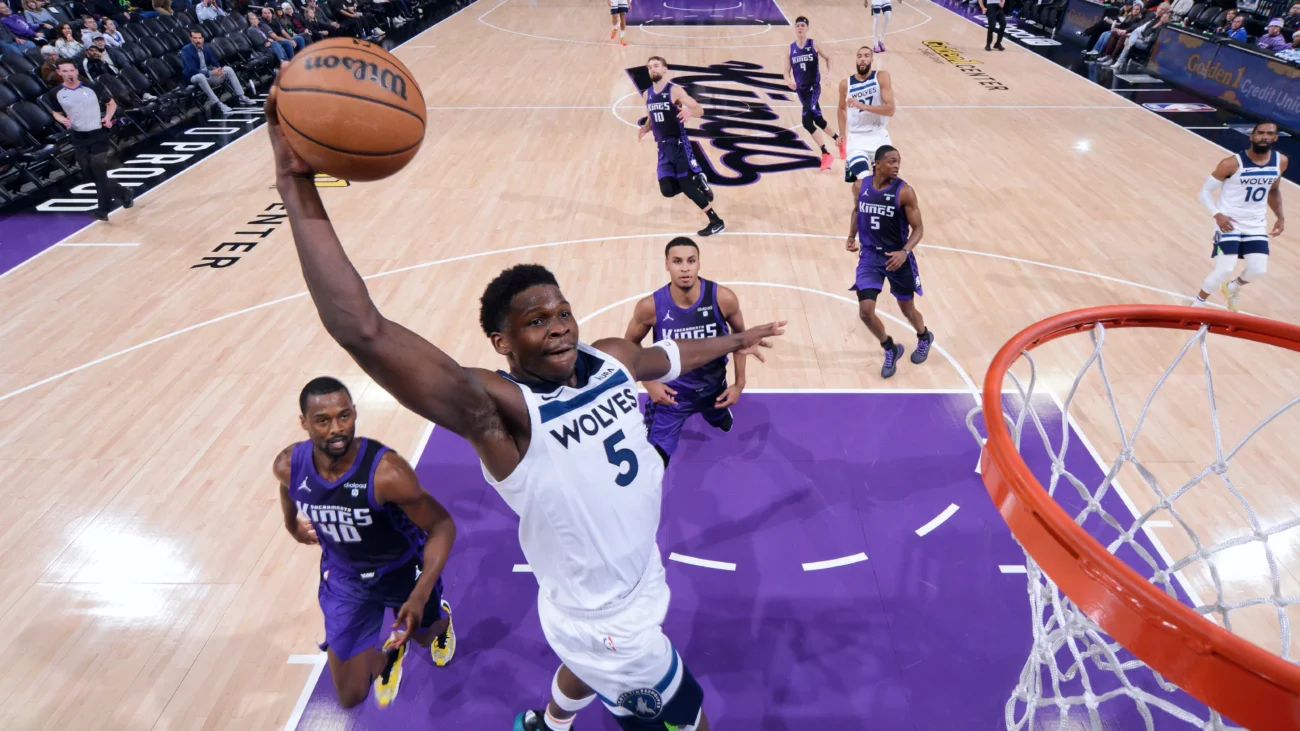
Clutch time = last 5 minutes, score within 5 points.
Timberwolves Strength
- Half-court execution
- Isolation scoring by Edwards
Kings Strength
- Fox mid-range pull-up
- Quick pace offense
Important clutch stats:
- Free throw %
- Turnovers
- Shot selection
Fox historically thrives in clutch games.
Tactical Adjustments That Change Stats
If Kings Want to Win:
- Push pace early
- Attack Gobert in pick-and-roll
- Force Towns into foul trouble
If Timberwolves Want to Win:
- Slow tempo
- Dominate boards
- Limit transition points
What the Stats Mean for Future Games
Looking at recent trends:
- If Kings shoot under 34% from three → Minnesota favored.
- If Sabonis records triple-double → Kings highly competitive.
- If Edwards shoots 50%+ → Wolves usually win comfortably.
Patterns matter more than single-game numbers.
Common Fan Questions Answered
Who usually scores the most in Timberwolves vs Kings games?
Anthony Edwards and De’Aaron Fox typically lead scoring.
Who controls rebounds in this matchup?
Rudy Gobert and Domantas Sabonis dominate boards.
Minnesota often has slight rebounding edge.
Why are Kings games higher scoring?
Because they play faster and attempt more threes.
What stat decides the game most often?
Turnovers and transition points.
Is this matchup playoff-relevant?
Yes. Both teams compete for Western Conference positioning.
Key Takeaways From Timberwolves vs Sacramento Kings Match Player Stats
- Edwards vs Fox is the headline duel.
- Gobert vs Sabonis decides paint control.
- Bench scoring swings momentum.
- Turnovers are critical.
- Clutch execution separates winners.
Numbers don’t lie. But context explains them.
Conclusion
The Timberwolves vs Sacramento Kings match player stats show much more than a scoreboard.
Minnesota wins when:
- Defense controls pace
- Edwards scores efficiently
- Rebounding edge is clear
Sacramento wins when:
- Fox dominates late
- Sabonis controls boards
- Three-point shooting is hot
This matchup blends speed vs structure.
Offense vs defense.
Clutch shot-making vs disciplined execution.
And that’s why every game between the Minnesota Timberwolves and Sacramento Kings delivers compelling stats worth analyzing.
FAQs
Who had the best performance in recent Timberwolves vs Kings games?
Usually Anthony Edwards or De’Aaron Fox lead in scoring, while Sabonis often posts near triple-doubles.
How important are bench stats in this matchup?
Very important. Kings rely heavily on Malik Monk’s scoring off the bench.
Which team has better defense?
Minnesota ranks higher defensively due to rim protection and rebounding strength.
What’s the biggest mismatch?
Sometimes Sabonis pulling Gobert away from the paint creates defensive gaps.