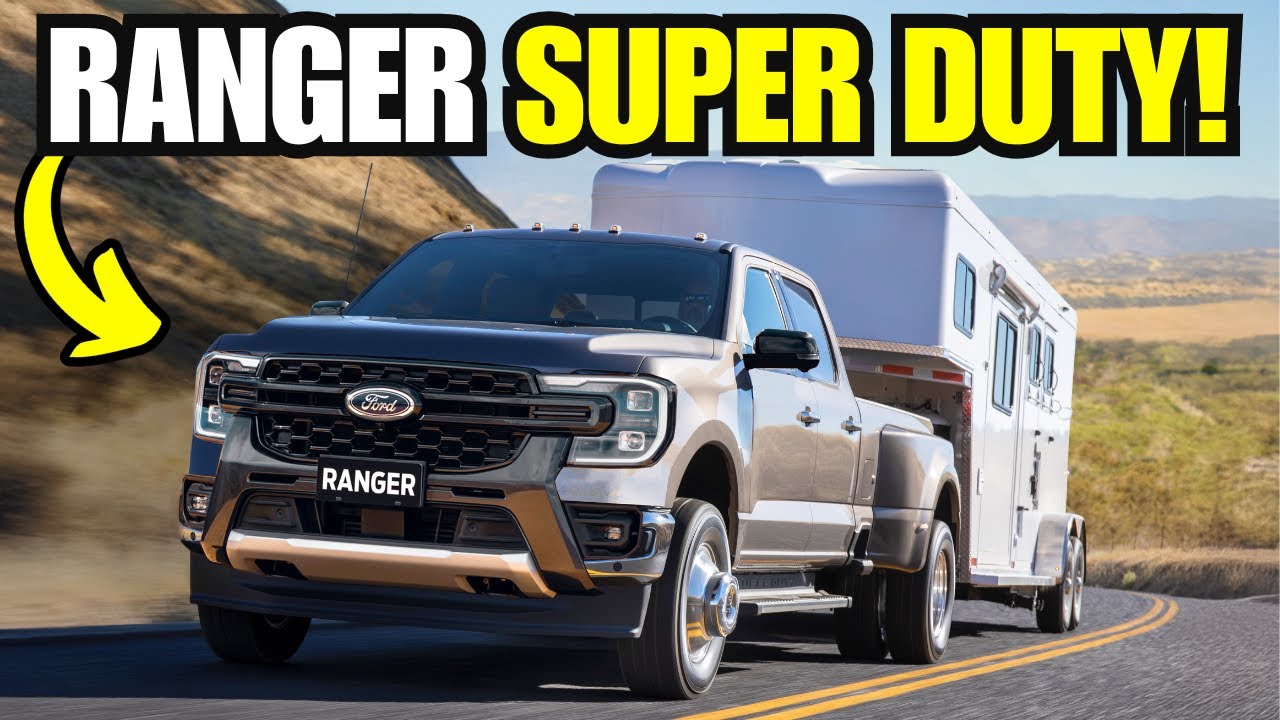
The midsize truck market in the United States has changed fast. Buyers no longer want a small truck that feels limited. They want real power. Real towing. Real work capability. But they also want something easier to drive than a full-size heavy-duty pickup.
That’s where the Ford Ranger Super Duty enters the conversation.
Built on the strong foundation of the global Ford Ranger, the Super Duty version is designed for serious work. It fills the gap between the standard Ranger and the heavy-duty Ford F-250 Super Duty. For contractors, fleet managers, farmers, and outdoor enthusiasts, this could be the perfect middle ground.
This guide breaks everything down clearly:
- What the Ford Ranger Super Duty really is
- How it compares to the regular Ranger
- Towing, payload, engine, and performance details
- Real-world use cases in the U.S.
- Who should buy it
- What competitors miss
- Answers to common buyer questions
Let’s get started.
What Is the Ford Ranger Super Duty?
The Ford Ranger Super Duty is a heavy-duty version of the midsize Ranger platform. It is engineered for higher payload, stronger towing, tougher suspension, and commercial-grade durability.
Think of it as a “work-focused Ranger.”
It sits between:
- Standard Ford Ranger
- Heavy-duty Ford F-250 Super Duty
For many U.S. buyers, that’s exactly the sweet spot.
Why This Truck Matters in the United States
Most competitor articles focus on Australia or fleet sales pages. They talk about specs but skip real-life U.S. use cases.
Here’s what matters for American buyers:
- Many people tow equipment but don’t need a full-size diesel truck.
- Urban contractors want strength without full-size parking headaches.
- Outdoor users want durability for off-grid trips.
- Fleet managers want lower fuel costs than heavy-duty trucks.
A Ranger Super Duty could offer:
- Easier daily driving
- Lower cost than full-size trucks
- Serious towing capability
- Heavy-duty frame strength
That combination is rare.
Engine and Performance
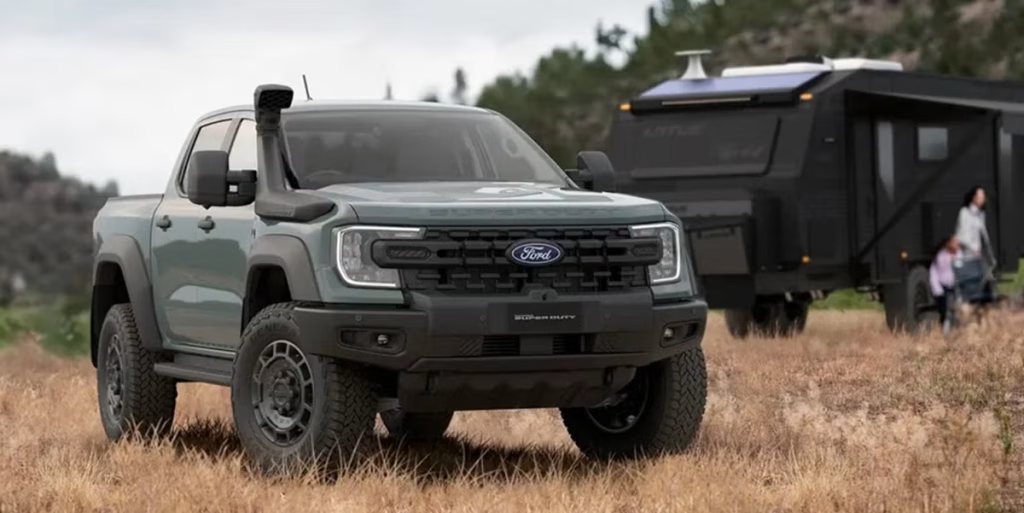
While final U.S. specs may vary, global versions of the Ranger Super Duty are expected to use a powerful turbo-diesel engine tuned for heavy loads.
The modern Ranger platform already supports strong engine options. In the U.S., the current Ford Ranger offers a turbocharged 2.3L EcoBoost engine. But Super Duty variants globally often include high-torque diesel options designed for commercial work.
What Makes It “Super Duty”?
It’s not just engine power.
It includes:
- Reinforced chassis
- Heavy-duty suspension
- Upgraded cooling systems
- Stronger rear axle
- Increased Gross Vehicle Weight Rating (GVWR)
That means it can:
- Carry heavier loads in the bed
- Tow larger trailers safely
- Handle rough job sites
Competitor articles list numbers. But they don’t explain what those numbers mean for daily life.
Let’s fix that.
Towing Capacity: What It Means for You
Towing capacity is one of the biggest search queries around the Ranger Super Duty.
Why It Matters
If you tow:
- Construction trailers
- Landscaping equipment
- Boats
- Campers
- Horse trailers
You need stability and torque.
A properly configured Ranger Super Duty could approach or exceed 7,500–8,000+ pounds of towing, depending on setup.
That puts it above many midsize competitors and closer to entry-level full-size trucks.
Real-World Example
If you own:
- A 24-foot boat
- A dual-axle equipment trailer
- A medium camper
You likely don’t need an F-250. But a standard Ranger might feel stretched.
The Super Duty version closes that gap.
Payload Capacity: The Forgotten Number
Most people focus on towing. But payload is just as important.
Payload includes:
- Tools in the bed
- Passengers
- Cargo
- Tongue weight from a trailer
Heavy-duty suspension and reinforced frames allow Super Duty variants to handle higher payload numbers than standard midsize trucks.
For contractors, this is huge.
You can load:
- Generators
- Toolboxes
- Cement bags
- Work gear
Without stressing the truck.
Competitor articles often mention payload but fail to explain how it impacts real work scenarios. That’s the difference between specs and usability.
Frame and Chassis Strength
The Super Duty name isn’t just marketing.
Ford’s Super Duty badge is associated with durability. The full-size Ford F-250 Super Duty and Ford F-350 Super Duty are known for their strong frames.
Applying similar philosophy to a Ranger platform means:
- Thicker steel
- Reinforced mounting points
- Upgraded suspension geometry
- Stronger leaf springs or coil systems
That gives better long-term durability for commercial use.
Off-Road and Worksite Performance
The Ranger platform is already known for capability. Variants like the Ford Ranger Raptor focus on speed and off-road performance.
But the Super Duty focuses on load-carrying and worksite toughness.
What That Means:
- Better stability under weight
- Less rear sag
- Improved braking under load
- Stronger cooling for towing uphill
If you live in:
- Mountain states
- Rural areas
- Desert regions
- Snow-heavy climates
The added durability matters.
Interior and Technology
Competitor fleet pages barely mention interior features.
But U.S. buyers care about:
- Comfort
- Infotainment
- Safety
- Driver assistance
The current Ranger platform includes:
- Large center touchscreen
- Apple CarPlay
- Android Auto
- Digital instrument cluster
- Advanced driver assistance systems
Expect Super Duty trims to maintain modern tech while prioritizing work durability.
Fleet models may offer simpler interiors. Retail versions may include premium materials.
Fuel Economy Considerations
One reason buyers hesitate to move up to an F-250 is fuel cost.
Full-size heavy-duty trucks consume more fuel. Insurance is higher. Maintenance is higher.
A Ranger Super Duty could offer:
- Better fuel efficiency
- Lower long-term operating cost
- Easier maintenance
For small business owners, that matters more than raw horsepower.
How It Compares to Key Competitors
In the U.S., buyers often compare midsize trucks like:
- Toyota Tacoma
- Chevrolet Colorado
- Nissan Frontier
But none currently carry a true “Super Duty” style heavy-duty midsize configuration.
That’s the gap Ford is targeting.
If priced right, it could dominate contractors who don’t want to jump to full-size trucks.
Who Should Buy a Ford Ranger Super Duty?
This truck is ideal for:
1. Contractors
Electricians, plumbers, landscapers, builders.
You get serious capability without oversized bulk.
2. Fleet Managers
Lower cost than heavy-duty trucks. Still strong enough for daily work.
3. Rural Property Owners
Tow tractors. Haul feed. Move equipment.
4. Outdoor Enthusiasts
Tow campers. Carry gear. Go remote.
5. Small Business Owners
Professional appearance. Practical strength.
What Competitor Articles Miss (Content Gap Coverage)
After reviewing competitor-style pages, here are the common weaknesses:
1. No U.S. Context
Most focus on Australian markets. American buyers need comparisons to U.S. trucks.
2. No Cost of Ownership Discussion
Buyers care about long-term cost. Competitors skip this.
3. No Real-World Use Cases
Specs are listed. Scenarios are not explained.
4. No Buying Guidance
No advice on who should choose it over a full-size truck.
5. No Towing Strategy Tips
No explanation of trailer brake controllers, weight distribution, or tongue weight management.
We covered all of that here.
Buying Tips Before You Choose
If considering a Ranger Super Duty, ask:
- What is my real towing weight?
- How often do I tow heavy loads?
- Do I need diesel torque?
- Will I drive daily in tight spaces?
- Is fuel cost a priority?
If you rarely exceed 6,000–7,000 pounds towing, this could be perfect.
If you tow 12,000+ pounds weekly, you may still need an F-250.
Expected Pricing Strategy
While official U.S. pricing may vary, expect it to land:
- Above standard Ranger trims
- Below F-250 Super Duty models
That middle pricing position is key.
It could become one of the smartest work-truck investments in America.
Is It Worth Waiting For?
If you’re currently debating between:
- A midsize truck that feels slightly underpowered
- A full-size truck that feels oversized
Waiting for the Ranger Super Duty could make sense.
It bridges the gap.
Conclusion
The Ford Ranger Super Duty is not just a badge upgrade.
It represents a shift in the American truck market.
More people want:
- Real towing strength
- Practical size
- Lower cost of ownership
- Commercial durability
If Ford executes it well in the U.S., this truck could become a favorite among contractors, fleet buyers, and outdoor users.
It delivers heavy-duty capability without full-size compromise.
That’s the balance many Americans have been waiting for.
FAQs
What is the towing capacity of the Ford Ranger Super Duty?
Expected to exceed standard Ranger ratings and potentially reach 7,500–8,000+ pounds depending on configuration.
Is the Ranger Super Duty coming to the United States?
Availability may vary. Buyers should check with local Ford dealerships for confirmed U.S. release details.
How is it different from the regular Ranger?
It features reinforced chassis components, upgraded suspension, higher payload capacity, and stronger towing capability.
Is it better than a full-size F-250?
It depends on your needs. For moderate towing and daily driving, it may be more practical. For extreme towing, the Ford F-250 Super Duty still leads.
Is it good for commercial fleets?
Yes. Its durability, towing strength, and potentially lower operating costs make it attractive for fleets.
If you want a truck that works as hard as you do without feeling oversized, the Ford Ranger Super Duty could be the ideal solution.